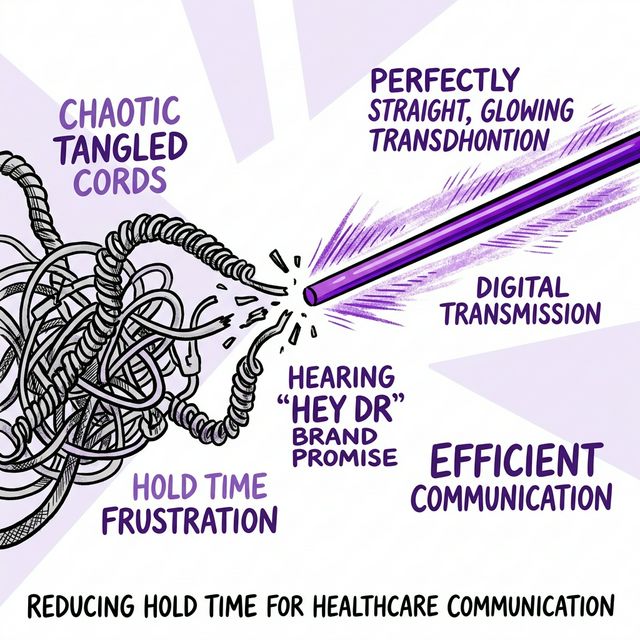
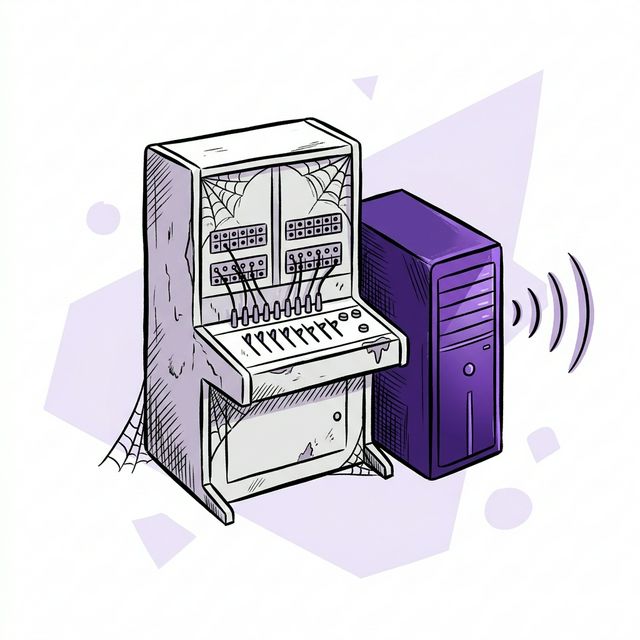
The traditional medical answering service is officially obsolete.
For decades, the standard protocol for managing after hours communication or daytime overflow was entirely dependent on third party call centers.
Today, high performing clinics are systematically severing ties with these legacy institutions.
The shift is not driven merely by cost reduction.
It is driven by a fundamental necessity to completely control the patient experience.
The Failure of Scripted Human Labor
Traditional answering services offer a distinct illusion of continuity.
While a human theoretically answers the phone, the actual utility provided to the caller is severely restricted.
These operators follow incredibly rigid, generic scripts.
They entirely lack deep integration with the specific operational realities of the clinic they ostensibly represent.
Think about the intent of your patients.
- A high intent prospective patient calling a dental office or med spa after hours is rarely calling to simply leave their name and number on a sticky note.
- They are attempting to resolve a problem.
- They need to confirm a cancellation policy.
- They want to immediately secure a consultation slot.
When the human operator acts exclusively as a human answering machine, the caller experiences massive friction.
They rapidly diminish trust in the practice's operational competency.
The Autonomous Transformation
The pivot away from outsourced call centers is driven by the stark contrast in capability provided by integrated artificial intelligence.
An AI agent does not vaguely take a message.
It intelligently triages the conversation.
"By ingesting the specific clinical knowledge base and directly interfacing with the calendar infrastructure, an AI agent conducts definitive actions."
When a patient calls an advanced infrastructure practice on a Sunday evening, the intelligent agent fluently answers their specific pricing inquiries.
It verifies standard protocol constraints.
It actively books the appointment into a live scheduling pipeline.
The transaction concludes, the patient is satisfied, and revenue is actively secured without a single human administrator lifting a finger.
A New Baseline for Care Coordination
Medical practices exist in a hyper competitive environment where response latency directly correlates to lost patient acquisition.
The traditional model of batching messages over the weekend and frantically dialing patients down a list on Monday morning is structurally dead.
Top practitioners have realized that patient care effectively begins the millisecond the telephone rings.
Delegating that initial point of contact to an uninformed intermediary permanently jeopardizes the relationship.
Autonomous voice technology has fundamentally evolved from a novelty into a compulsory requirement.