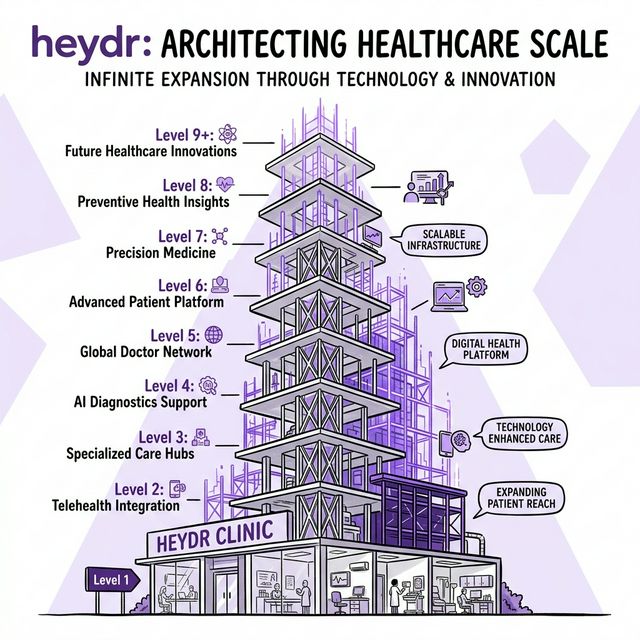

The growth trajectory of your medical practice is entirely dictated by one specific bottleneck.
Your front desk.
It acts as the singular physical and digital gateway for revenue.
When growth accelerates, that gateway inevitably chokes.
This forces practice owners into a precarious economic dilemma concerning staffing and overhead.
The Payroll Paradox
When a practice attempts to handle an influx of new patients, the default operational response is predictable.
Hire additional administrative personnel.
But this instantly creates a payroll paradox.
Increasing headcount to manage current growth aggressively erodes the profit margin generated by that precise growth.
The practice expands superficially. Net profitability remains stagnant.
Human capital at the front desk is burdened by extreme multitasking fragmentation.
- A highly paid administrator constantly oscillates between greeting physical arrivals.
- They are simultaneously managing complex insurance verifications.
- They are endlessly fielding inbound telephone inquiries.
This fragmentation degrades the patient experience universally.
It ensures that critical follow ups slip through administrative cracks entirely.
Redefining Administrative Capacity
The strategic error practice owners make is equating administrative capacity strictly with human hours.
The goal is not to answer more phones using more people.
The true operational goal is to seamlessly process patient intake, inquiries, and scheduling with zero friction regardless of inbound volume.
"Modern clinical infrastructure has shifted drastically away from manual processing toward autonomous conversation models."
By deploying a specialized AI agent, a clinic untethers its growth from its staffing matrix.
The artificial intelligence fields an infinite number of simultaneous callers.
It references specific practice policies.
And it seamlessly books appointments into the native calendar architecture.
Achieving Frictionless Scalability
This operational pivot completely solves the fundamental problem of scalability within healthcare administration.
The cost to deploy an intelligent, voice driven agent is a tiny fraction of a single human salary.
Yet its capacity is virtually boundless.
Practitioners who recognize this are optimizing their existing human staff for high touch interpersonal patient care rather than basic data entry and call triaging.
They are effectively erasing their bottlenecks permanently while maintaining complete control over their operational payroll.