The traditional bottleneck in any high-volume medical clinic is determining who needs to be seen first.
A patient calls, describes severe lower back pain to an overworked agent, and that agent is forced to make a rudimentary clinical guess over the phone.
This manual triage process is deeply flawed, legally dangerous, and incredibly inefficient.
It places the burden of clinical sorting onto the shoulders of the lowest medically qualified individual in the building.
The Analogue Danger
When human beings are stressed, their ability to listen and accurately categorize complex information plummets.
They misinterpret the urgency of a symptom.
They slot a routine checkup into an emergency block and force an actual emergency wait three weeks for an open window.
- Triage is not an administrative task; it is the ultimate logistical puzzle.
- Humans default to chronological booking rather than severity-based booking because it is easier.
- This systematically destroys the operational efficiency of the provider.
The Intelligent Gateway
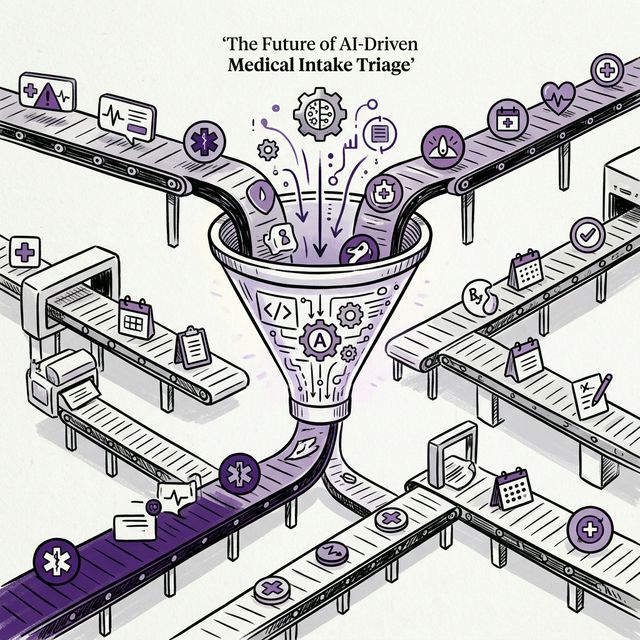
Artificial intelligence transforms intake from a guessing game into a perfectly tuned logic tree.
When a patient calls an AI agent, the system fluidly executes a complex, pre-approved clinical questionnaire.
"It listens to the specific acoustics of their complaint, parses keywords indicating severe distress, and instantly routes them to an immediate emergency slot if necessary."
There is no human bias.
There is no fatigue.
Architecting Precision
The patient arrives exactly when they need to arrive.
By relying on deterministic logic to organize the incoming chaos, you completely protect the liability of the clinic while maximizing the impact of your doctors.